NFT Marketplace
Community marketplace: co-created NFTs, sale revenue splits, Web3 portfolio, minting engine, and decentralized trading.
Commissioned build for a cowork with crypto adoption in Punta del Este, Maldonado.
- Year
- 2022
- Contribution
- Product design · User research · Product development
Case Study: NFT Marketplace
Overview
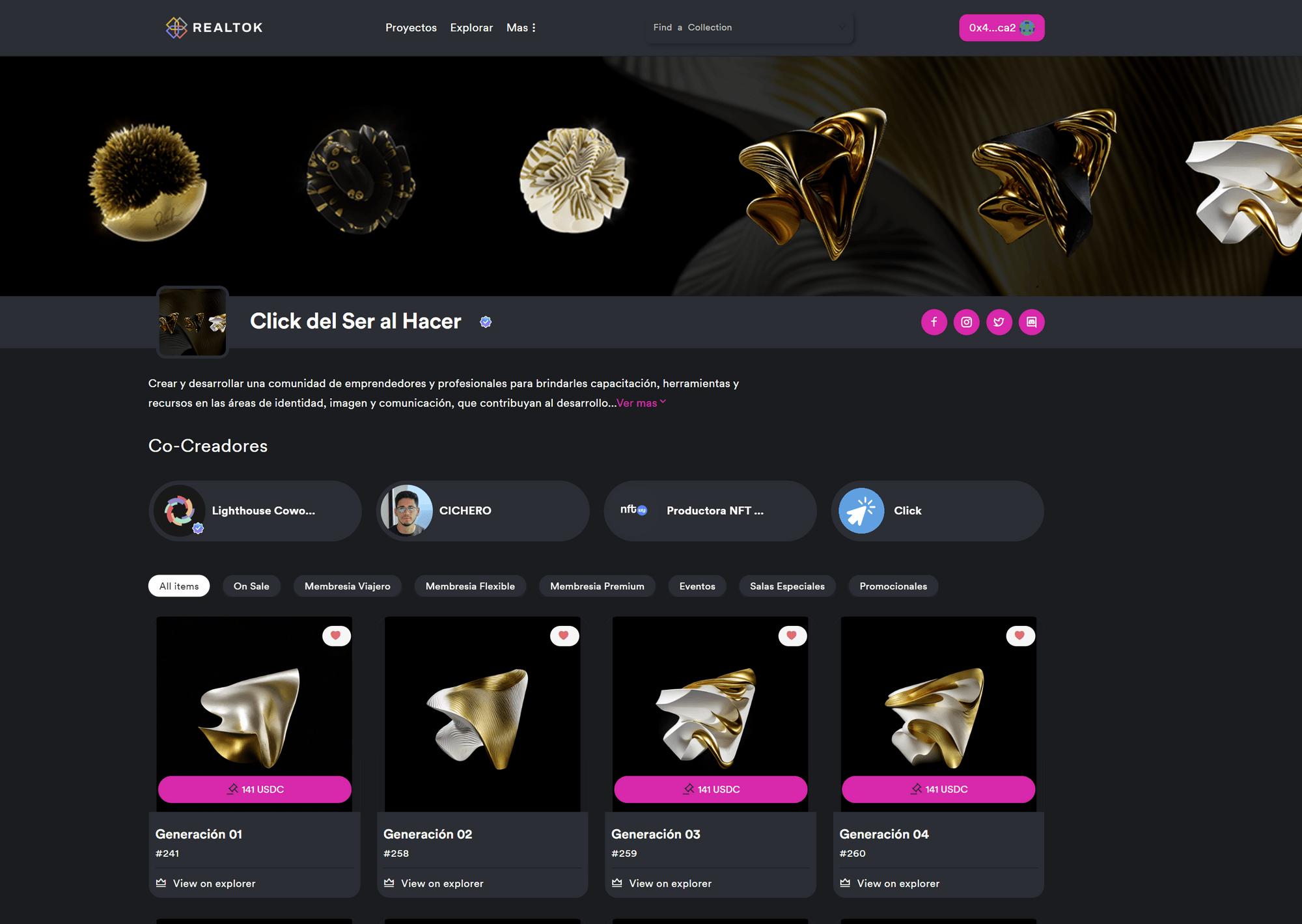
The sharing economy is a fundamental pillar for the sustainable development of new communities. Realtok Marketplace is a blockchain-based platform designed to incentivize community participation through the co-creation of NFTs. These assets represent social groups or collective objectives, allowing members to be rewarded for their specific contributions.
Beyond shared minting, the platform introduces a profit distribution system. Through split payments integrated into the smart contract, every contributor (art directors, tech specialists, sponsors, etc.) receives an automatic economic return at the moment of sale.
Project Details
- Year: 2022
- Role: Product Design, User Research, Product Development
- Team: 1 Project Manager, 1 Team Lead, 1 Engineer
Tech Stack
- Frontend: React, Wagmi, Web3.js, Ethers.js
- Backend: Node.js, Express, MongoDB, Moralis API
- Blockchain: Solidity (Smart Contracts), IPFS (Decentralized Storage)
Development Process
1. Setting the Foundations
The project was executed in stages defined by technical weight and strategic importance. We utilized Agile sprints with temporal goals and weekly syncs to ensure constant tracking and iterative development.
2. Portfolio Feature & Web3 Integration
The first milestone focused on the entry point: Web3 wallet authentication (MetaMask) and the user profile.
- Data Extraction: I used the Moralis API to fetch real-time blockchain data and metadata from IPFS.
- The Challenge: Metadata formats vary across different tokens. I developed a standardized support system to preview images, videos, audio, and GIFs, creating a seamless and interactive portfolio experience.
3. Minting Engine & Utility
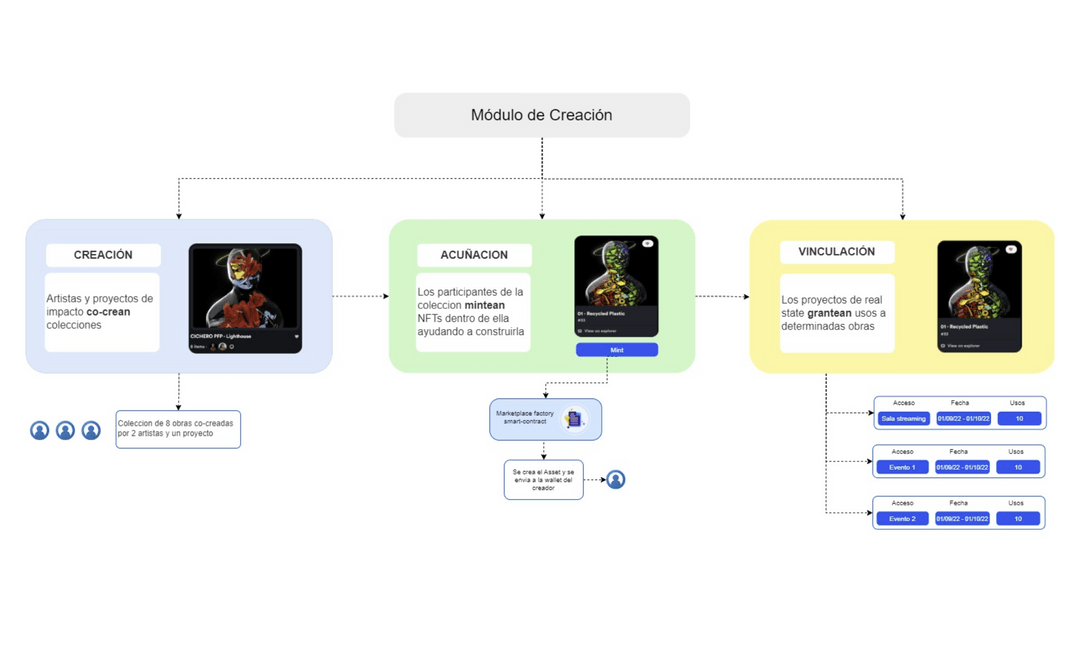
This module handles the creation of NFTs using the ERC-721 standard, with all assets and metadata hosted on IPFS.
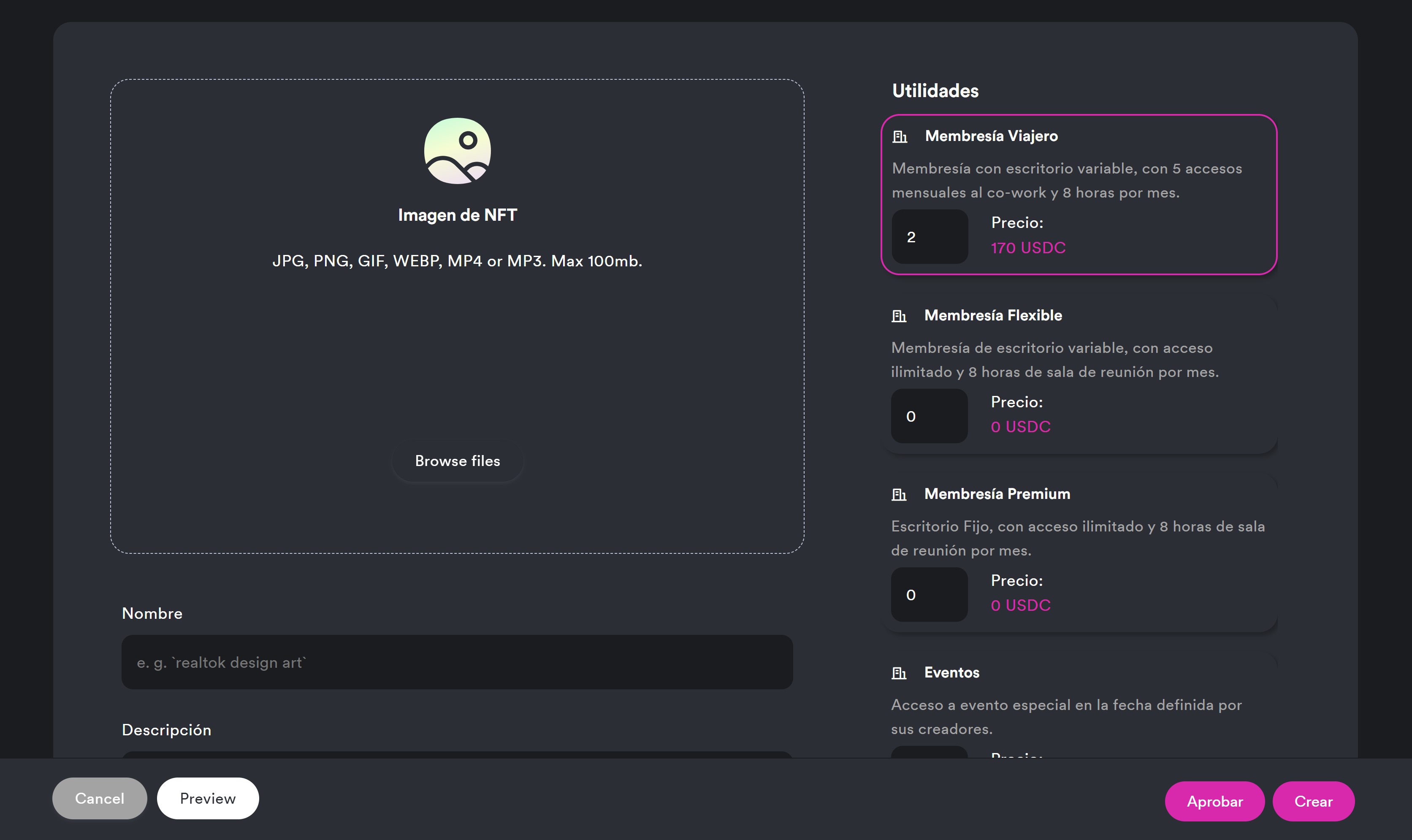
- Automated Royalties: The engine allows setting royalties (up to 20%) split among multiple recipient addresses.
- Real-World Utility: We enabled NFTs to carry attributes that grant tangible benefits. For example, in a coworking context, an NFT could grant access to streaming rooms or premium events.
- Hybrid Architecture: By combining blockchain logic with off-chain CRM integration, we managed these benefits efficiently without sacrificing the decentralized nature of the project.
4. Trading Module
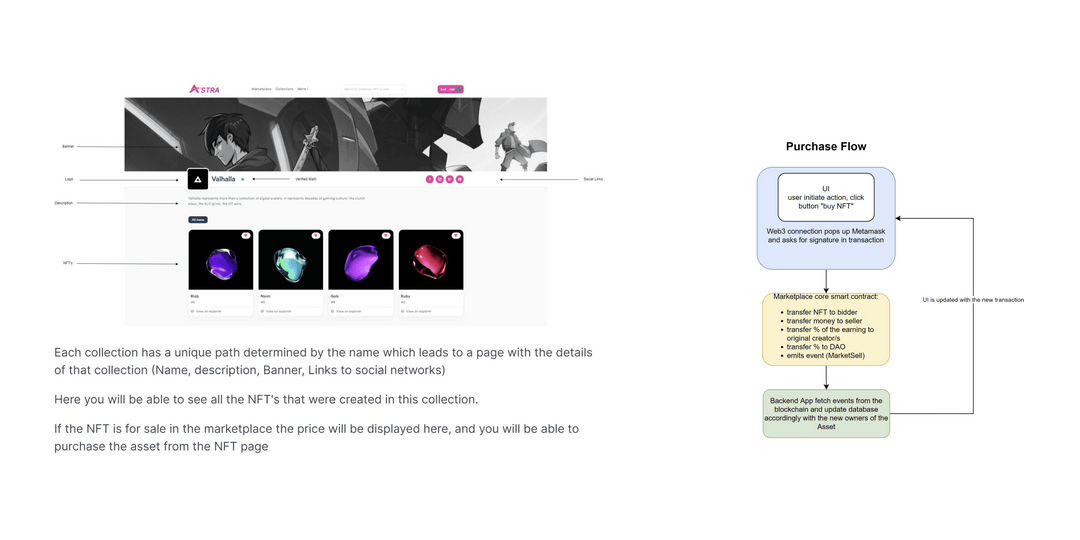
The core of the marketplace, powered by a custom smart contract designed for secure, decentralized transactions.
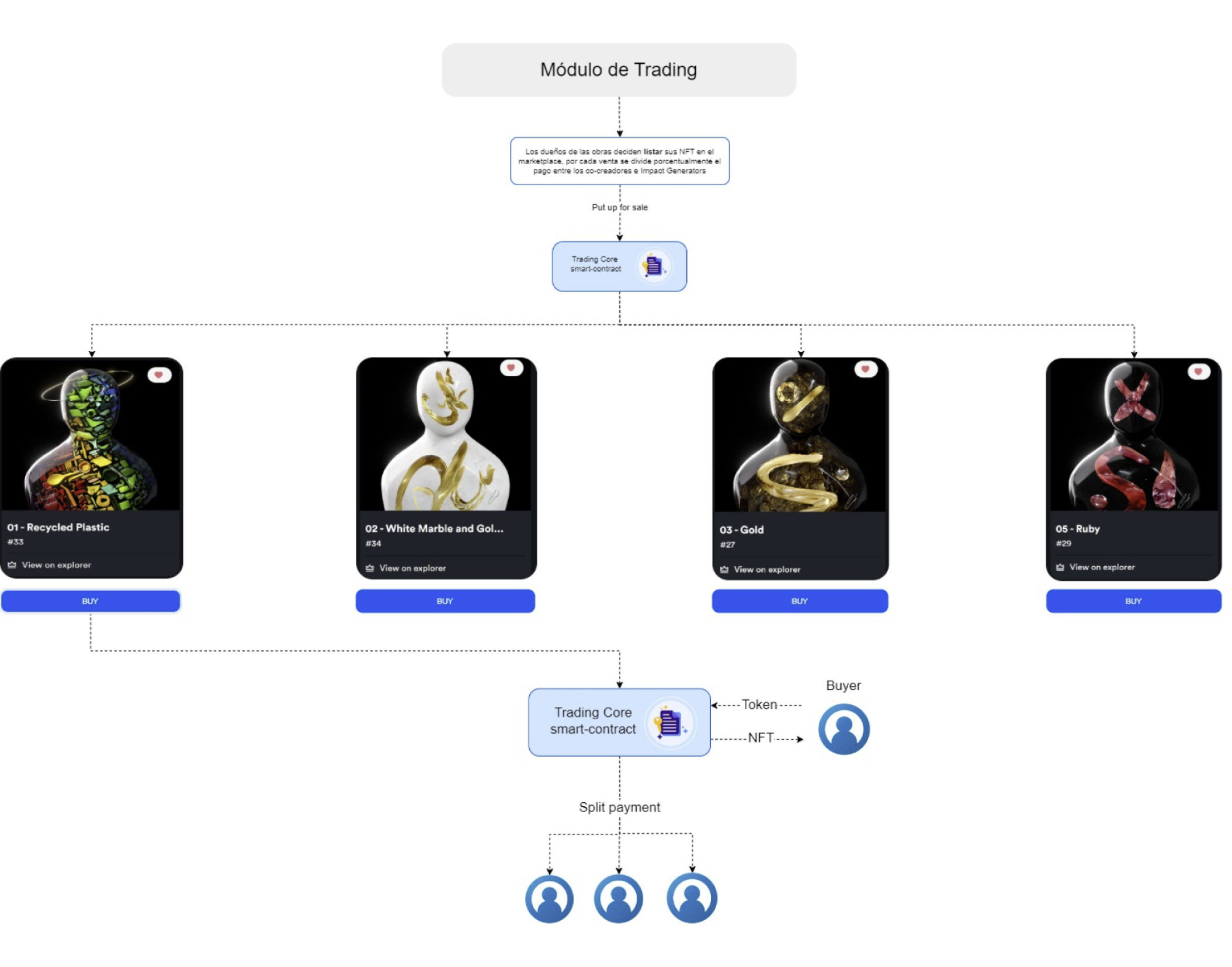
- Non-Custodial Listing: Users can list NFTs for sale via spending permissions. This means the asset stays in the user's wallet until the actual sale, allowing them to use it or list it on other platforms simultaneously.
- Atomic Swaps & Split Payments: When a purchase is executed, the NFT is automatically transferred to the buyer while the payment is automatically divided among co-creators in a single transaction.

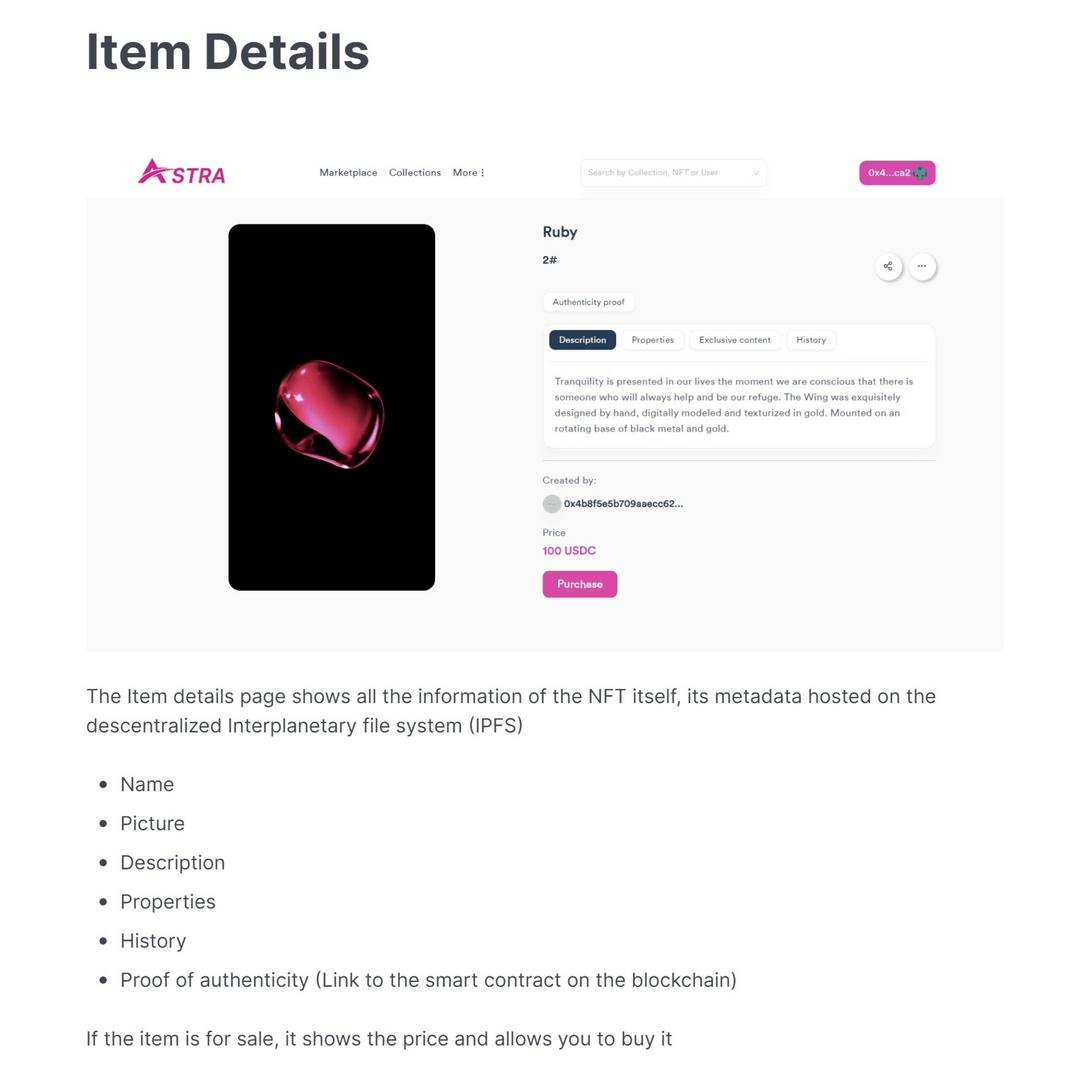
Outcome
After several iterations and releases, we established a high-performing baseline. This foundation allowed us to gather valuable user data, optimize the conversion journey, and prepare for the introduction of secondary core features.